
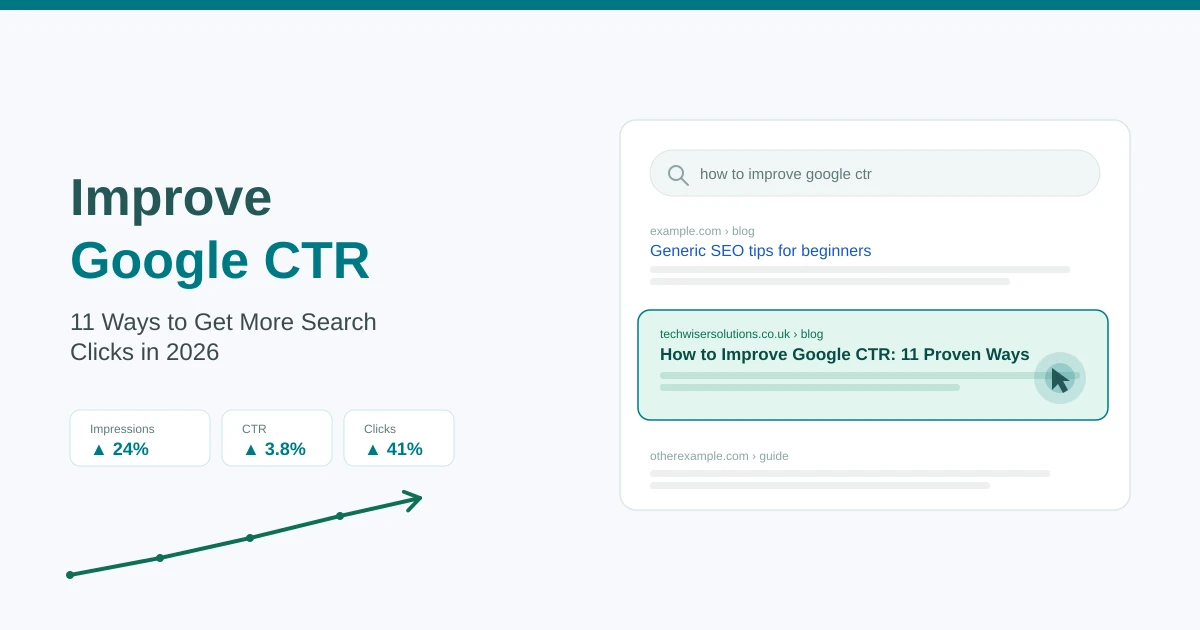
Getting your website to show up in Google Search is pretty important, but just getting impressions doesn’t really pull in visitors. When people can see your page, but they do not click it, then tuning your Google CTR can help you squeeze more value out of the same search visibility you already have.
Google Search Console shows clicks, impressions, average position, and click-through rate (CTR) so it’s kind of handy for checking how your pages end up performing in search. CTR is calculated from clicks compared with impressions, so a page with strong visibility but few clicks may have an opportunity for improvement.
What Is Google CTR?
Google CTR, or click-through rate, measures how often users click your website after seeing it in search results. For example, if your page receives 1,000 impressions and 50 clicks, its CTR is 5%.
CTR can vary depending on search position, device, query, industry and search intent. Therefore, there is no single CTR percentage that is considered good for every website.
11 Ways to Improve Google CTR
Improving Google CTR starts with making your search result more relevant and appealing to the right audience. These 11 practical tips can help you turn more search impressions into meaningful clicks without relying on keyword stuffing.
1. Write Clear Page Titles
Your title is one of the first things users see in Google Search. Make it specific, useful and closely connected to the search query instead of filling it with unnecessary keywords.
2. Match Search Intent
Understand what the searcher actually wants before optimizing your page. If someone is looking for a guide, comparison, service or solution, your title and content should clearly match that intent.
3. Improve Meta Descriptions
A relevant meta description can give users a quick reason to visit your website. Explain what the page offers and highlight a useful benefit without making exaggerated claims.
4. Use Numbers When They Add Value
Numbers can make titles easier to scan and understand. For example, “11 Ways to Improve Google CTR” tells readers exactly what they can expect from the article.
5. Make Your Content More Useful
A compelling search result should lead to a genuinely helpful page. Use clear headings, practical examples, concise explanations and direct answers so visitors quickly find what they need.
6. Target Relevant Long-Tail Keywords
Long-tail keywords often have clearer search intent than broad terms. Instead of targeting only “SEO,” consider specific searches such as “how to improve Google CTR for a business website.”
7. Find High-Impression, Low-CTR Pages
Google Search Console can help you identify pages that receive many impressions but relatively few clicks. Review their titles, descriptions, search intent and content to find opportunities for improvement.
8. Strengthen Internal Linking
Relevant internal links help visitors find related information and help search engines understand the structure of your website. Link your SEO articles naturally to related blogs, service pages and useful resources.
9. Improve the Mobile Experience
Your search result may attract a visitor, but a poor mobile experience can quickly lose them. Make sure your website is easy to read, fast to load and simple to navigate on smartphones.
10. Use Relevant Structured Data
Where appropriate, structured data can help Google understand your page and make it eligible for certain enhanced search appearances. Always use markup that accurately represents the content on the page.
11. Measure and Improve Regularly
CTR optimization should not be a one-time task. Monitor clicks, impressions, CTR and average position in Google Search Console, then compare performance after making meaningful improvements.
Why Google CTR Matters for UK Businesses
For UK businesses, appearing in Google is only part of the digital marketing journey. A clear and relevant search result can encourage potential customers to visit your website, explore your services and make an inquiry.
At Techwiser Solutions Ltd, SEO is about more than simply targeting keywords. A strong strategy combines search visibility, useful content, website experience and conversion opportunities to support sustainable online growth.
Improving Google CTR starts with understanding your audience and giving them a clear reason to click. Better titles, relevant descriptions, strong search intent, useful content and regular Search Console analysis can help turn existing impressions into more meaningful website visits.
CTR is only one little part of SEO, and when you boost it, that alone doesn’t really mean you will get higher rankings, not automatically. The real target is more like making every single search result feel more aligned and helpful for the real people you are trying to reach.
Google CTR FAQs
Have questions about Google CTR and getting more clicks from search results? Here are practical answers for businesses and website owners.
Google CTR, or click-through rate, measures how often people click your website after seeing it in Google Search. It is calculated using clicks compared with impressions and can help you understand how effectively your search listings attract visitors.
There is no single CTR that is considered good for every website. CTR can vary depending on search position, keyword, industry, device and search intent. Compare your pages with similar queries and monitor changes over time.
Start by improving page titles, matching search intent and writing useful meta descriptions. You can also review high-impression, low-CTR pages in Google Search Console and improve their content, relevance and search snippets.
CTR is an important search performance metric, but improving CTR should not be treated as a guaranteed way to increase rankings. Google rankings depend on many factors, including relevance, content quality, technical SEO, links and user experience.
Open the Performance report in Google Search Console and review clicks, impressions, CTR and average position. Look for pages receiving significant impressions but fewer clicks than expected, then review their titles, descriptions and search intent.
A clearer and more relevant title can make a search result more appealing to users. Keep the title accurate, concise and aligned with the page content rather than using exaggerated claims or unnecessary keywords.
UK businesses can improve search clicks by targeting relevant keywords, matching local search intent, writing clear titles and descriptions, and creating useful content for their customers. Regular SEO analysis can identify pages with opportunities for better search performance.
