
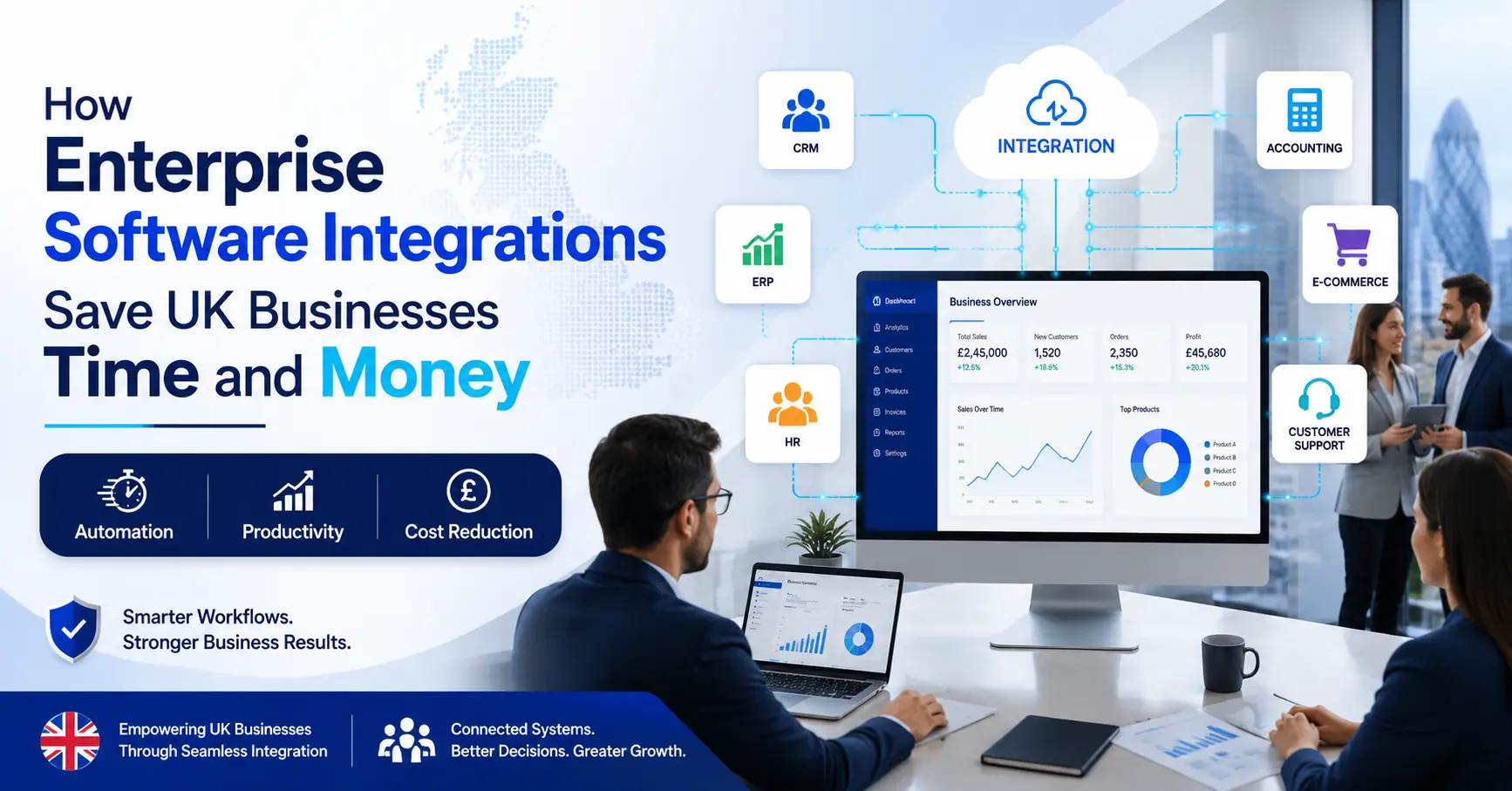
In the UK , a lot of Businesses are under constant pressure to get more done faster, cut expenses, and improve the whole customer experience kind of. As organisations grow bigger, they often end up using several software tools to handle different parts of daily work , like customer relationships, accounting, stock levels, sales tracking, marketing, and human resources. Sure, each one helps on its own but, when they all run in different places, separately, the problems start creeping in, because they don’t really talk to each other as smoothly.
Disconnected systems sometimes end up causing duplicated effort, uneven data, missed messages and also stuff that drags on, manual routines all day, you know. So that is why so many organisations are putting money into enterprise software integrations, UK businesses can rely on, to sort of streamline day to day work and boost overall productivity.
At Techwiser Solutions Ltd , we help businesses link their critical systems , you know, so there is this seamless flow of information that saves time, cuts operational expenses, and backs long term growth too.
What Is Enterprise Software Integration?
Enterprise software integration is basically the process of linking different business applications so they can talk, and exchange info automatically. Instead of employees typing the same stuff in several systems, integrated software makes sure that data is actually shared in real time across the whole organization. It’s sort of seamless, you know, and it keeps things from lagging.
For instance, when someone makes an order via an e-commerce platform, the data can automatically push updates into the CRM system, the accounting software, inventory records, and even reporting dashboards, kinda in one flow. It removes those repetitive tasks, and it also boosts the operational efficiency, overall.
By creating a connected digital surroundings businesses get better view into their operations while also lowering the risk of pricey mistakes that can get costly, in the end.
Reducing Time Spent on Manual Processes
Many businesses are still on manual data input and lots of repeat administrative chores. Employees usually spend hours moving details from one system to another, refreshing records, producing status summaries, or fixing mismatched items.
Enterprise software integration kind of wipes out these annoying bottlenecks by running the routine workflows automatically. Data moves on its own across the connected platforms, so the teams can focus on more strategic work and not the day to day admin stuff, which is honestly where people get stuck.
This boosts efficiency a bit, so businesses can finish tasks faster and improve productivity too, and then they make better use of their workforce as well.
Lowering Operational Costs
Every manual process has a cost, like it eats time and mental capacity, maybe slightly slower, but also it adds risk. Time spent on repetitive work, fixing errors, and handling disconnected systems can really start to hurt profitability.
Integrated software solutions help lower those costs by automating workflows, and by making day to day operations run smoother, so process efficiency improves. Businesses can do more with their current resources while minimising needless admin expenses. Sometimes it feels almost too simple, but it still matters.
Automation also cuts down on the need for repeated work across departments, it helps orgs optimize resource allocation, and then you get improved overall performance too. Basically, less duplication, more flow, more effect, even if it sounds small at first..
Improving Data Accuracy and Business Visibility
Accurate data is required for making informed business decisions. When the information gets stored in separate systems, discrepancies can show up, and then reporting errors can happen, that makes the insights feel a bit unreliable.
Enterprise software integrations kind of help set up a centralised flow of information across departments, so like Sales, finance, operations and customer support teams can reach accurate almost real-time data whenever they want. It keeps everything aligned, less guesswork and more smooth cooperation between people.
This improved visibility helps business leaders see what’s going on more clearly, monitor performance in a more effective way, spot opportunities faster and then respond quickly to changing market conditions.
Enhancing Customer Experience
Customer expectations keep changing, and honestly it’s like faster replies are a must, plus personalised service, and even that consistent communication across every single touchpoint.
When systems get integrated, employees can reach customer information in one place like purchase history, invoices, support requests and communication records , all together. That makes it possible for teams to answer faster and craft a more tailored customer experience, sort of.
Improved customer service not only helps tighten client relationships but can also boost keeping customers and longer term income.
Supporting Scalable Business Growth
As businesses expand, operational complexity tends to go up, like somehow naturally. You end up with new departments, and add extra software tools, plus growing customer demands, and that can lead to inefficiencies if everything stays disconnected.
Enterprise software integration kinda gives the base layer for scalable growth, you know. Automated workflows, plus connected systems, lets a business juggle more work without really adding that much extra admin work or overhead.
This flexibility helps organisations kind of adapt to the shifting business needs while still keeping the day to day operations running efficiently, which is pretty good actually for most cases.
Why Enterprise Software Integrations Are Becoming Essential
Digital transformation is like it’s no longer optional, if a business wants to stay competitive . Organisations that put money into connected technology solutions tend to be more well placed, to push forward productivity, lower costs , and deliver improved customer experiences.
Enterprise software integrations help businesses cut down on data silos , make teamwork more smoother, and get better control over the day to day operations. Whether you’re backing up internal workflows or building customer-facing services, connected systems do something sort of essential for modern business success.
For UK businesses chasing sustainable growth, software integration has turned into a necessary investment, not just a technical convenience really.
Enterprise software integration has a lot of benefits for businesses that want to get more efficiency and lower operational costs, because when you link essential applications together and automate workflows , organisations end up cutting out manual processes, boosting data accuracy , and generally making the workplace feel more productive.
As digital transformation keeps reshaping the UK business landscape, integrated software systems are kind of becoming more and more important for staying competitive, supporting that growth too, and honestly keeping things working smoother.
At Techwiser Solutions Ltd, we help businesses put together tailored integration solutions that simplify operations, boost performance, and bring measurable results. By investing in enterprise software integration today, it can help us create a more efficient, scalable ,and future-ready business tomorrow.
